

I love summer holidays — it still marks a time of year in which everyone savors the time to take a break from the normal pace of life. No matter what type of holiday we take, I always appreciate it as a time to explore, reflect and relax. Travel has always been a way to indulge my curiosity in places and their history.
This summer, we visited two cities that are familiar but somehow every time we visit they show us something new about them — Paris and Venice. Therefore, I am going to share this post in two parts, one on each city.
Paris, La Ville Lumière
Paris, the City of Light, La Ville Lumière, always shines brightly for me. It was one of the first European cities I visited as a teenager. It carries the name for two reasons: first, for being one of the first European cities to adopt gas street lighting in the nineteenth century, and second, for being known as a global hub for science, philosophy, and education in the seventeenth and eighteenth centuries.
La Résistance for the “Right to the City”
What I appreciate about Parisians is their commitment to resistance. When I was studying engineering, we were taught urban planning based on Le Corbusier’s Radiant City model applied in Paris. It prioritized high-speed traffic for cars, dense parking in cities, and drawing people into suburban sprawl. It was the model used across most U.S. cities. The May 1968 student and worker revolts, however, pushed back hard against this kind of modernist, car-first planning. This led to a “right to the city” collective civil resistance, an anti-car movement.
That spirit of resistance continued in Paris, and under Mayor Anne Hidalgo, the Ville du Quart d’Heure became the basis for an ambitious planning model. The goal is to ensure that every resident’s essential daily needs — work, grocery shopping, education, healthcare, and recreation — are accessible within a short 15-minute walk or bike ride from their home.
Egalitarian Biking as It Should Be
Since Hidalgo came into office in 2014, the city has transformed. Many may be aware of the Plan Vélo, the 1,000 kilometers of protected bike paths, in which the city heavily invested. The city also removed 60,000 car parking spaces. These two changes served as a major catalyst for micro-mobility — the shared bikes and scooters. What is great is that 40% of the fleet are e-bikes. In the peak summer months, Vélib’s own numbers show that each public bike is used more than 10 times a day on average — a stat I was happy to confirm rather than take on faith. What I was also happy to see was that new Vélib’ subscribers reached nearly 49% women in the months after lockdown, up from 40% before the pandemic — protected bike lanes clearly playing a role in making it a more egalitarian mode of transport.
Reuse of Industrial Architecture for Park Benches
Another resistance initiative that we visited this time was the Promenade Plantée. This is a pedestrian-first adaptive reuse project started in the late 1980s for the Vincennes railway line. It became the world’s first elevated linear park when it was inaugurated in 1993, inspiring the later New York City High Line. It is a beautiful 4.7-kilometer-long viaduct with a lush green walkway. It has lots of park benches with many people enjoying their lunch or a coffee. The brick arches below it have been renovated into the Viaduc des Arts, filled with really interesting local craft boutiques and workshops.
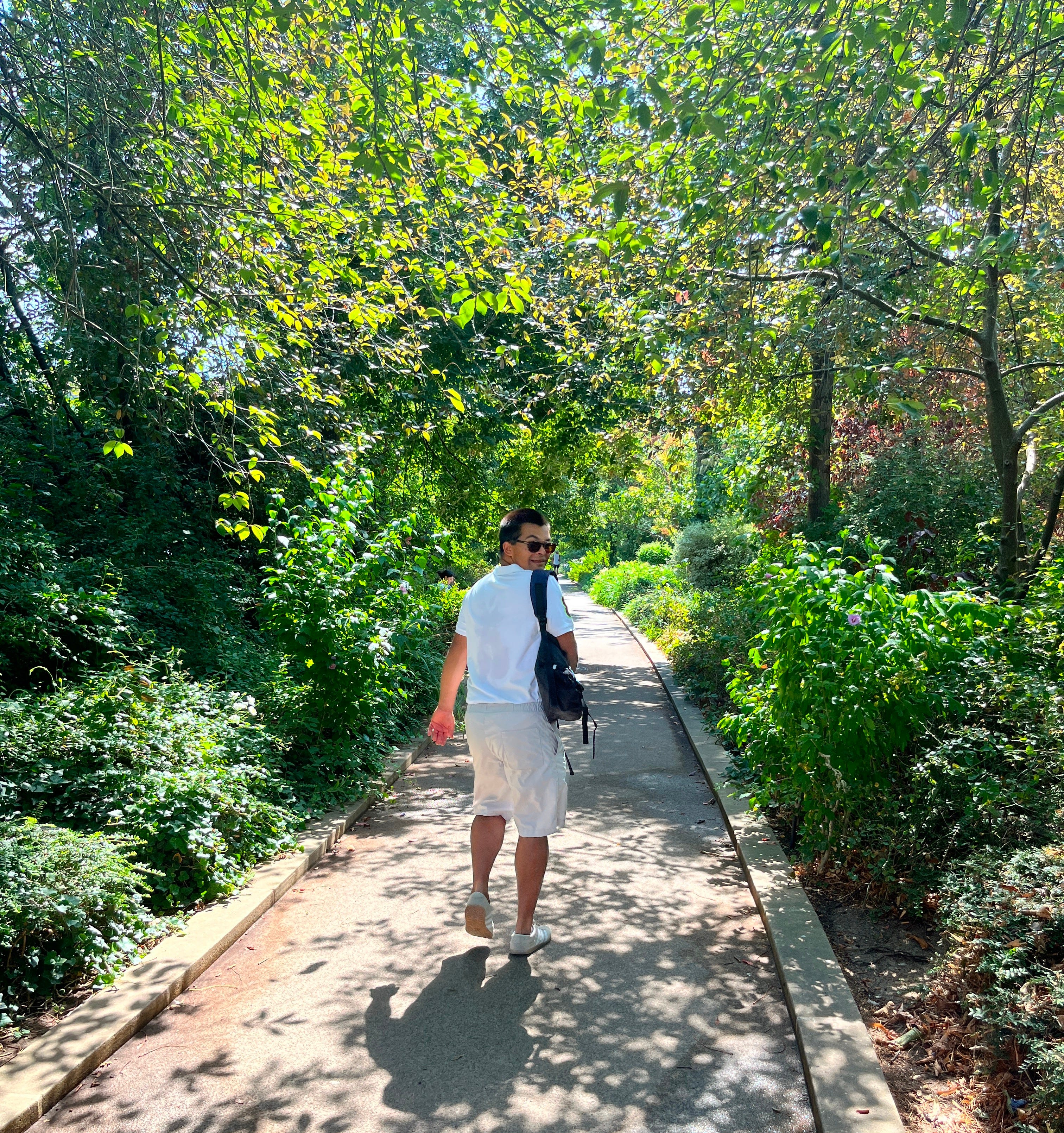
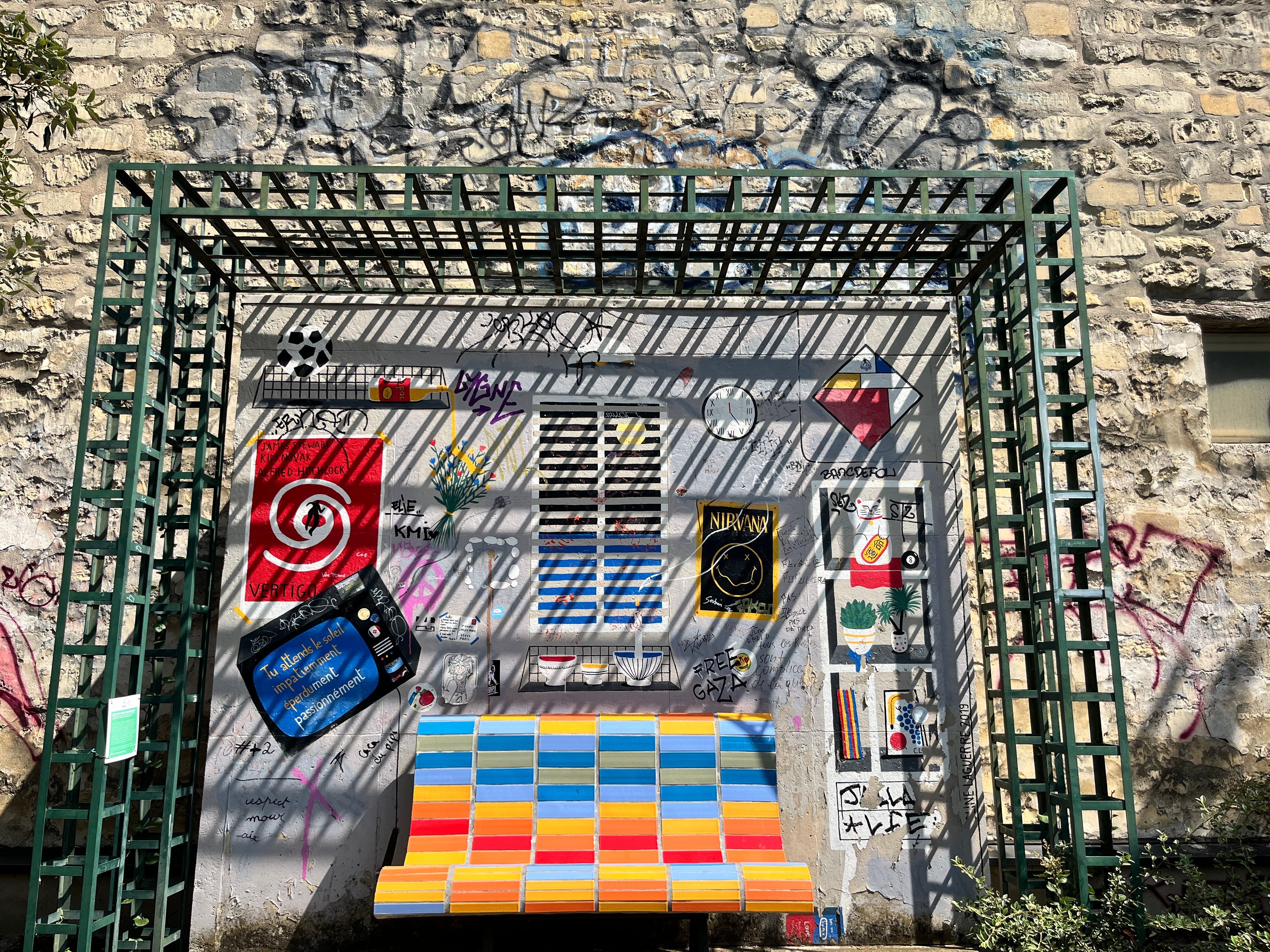
Lastly, we enjoyed how these measures also allowed the typical Parisian cafe culture to extend beyond the sidewalks, where traffic was closed off to cars. In these little parks where the streets intersect, the atmosphere was lively in the evenings with restaurants extending their tables and the overflow of people sitting on park benches. One day, we even saw a roller-skater group racing down the streets of Montmartre. Talk about reclaiming the right to the city!
What was your favorite summer discovery?